

NEWS

August 2026
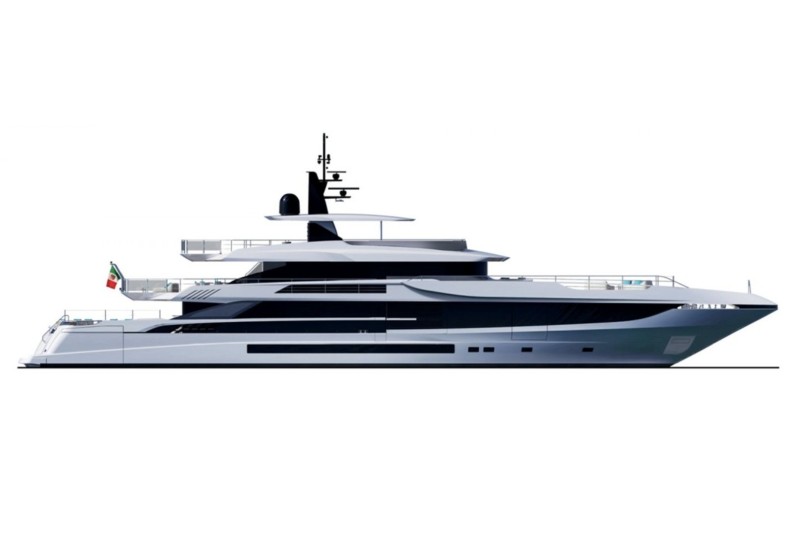
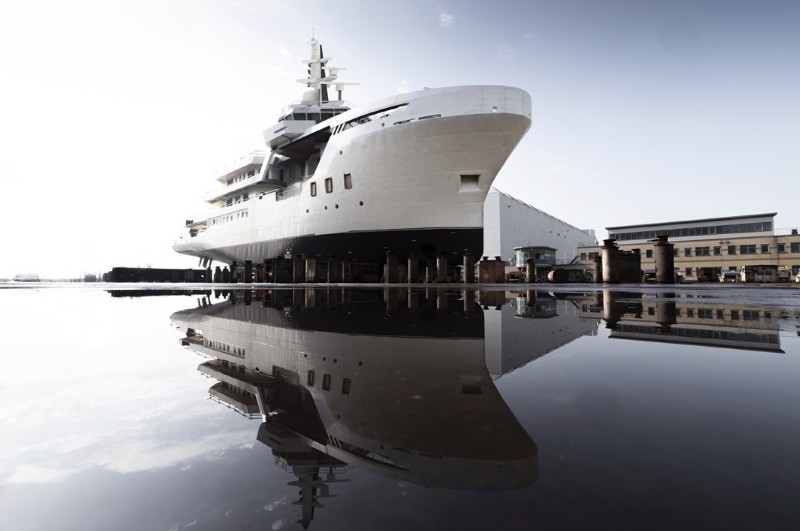
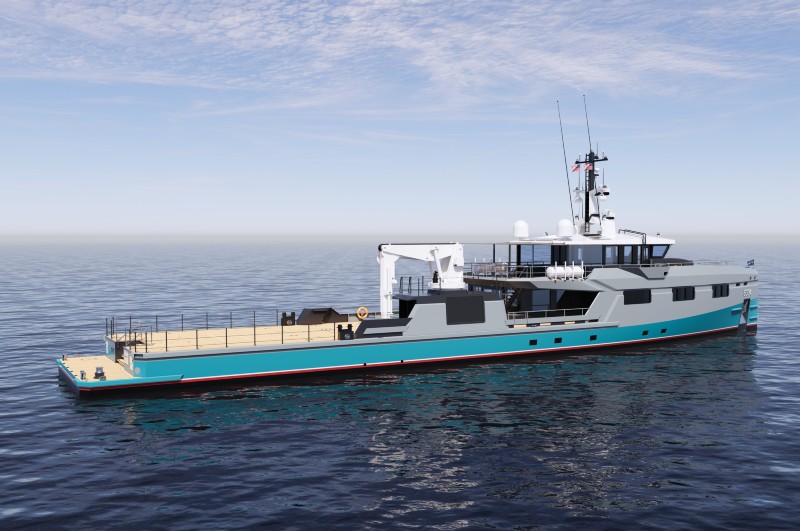
THE PLATFORM BEHIND PROJECT MASTERThe most interesting part of Project MASTER is the part you can’t see.
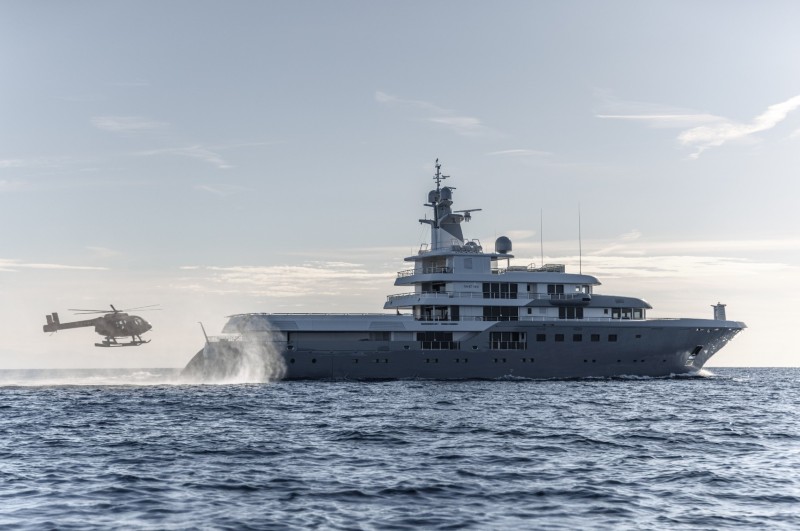
Our story starts with the rise of the North Sea offshore industry, the Piper Alpha disaster and the pioneering Ulstein UT vessel designs that transformed offshore shipbuilding. Together, these events shaped a new generation of Emergency Response and Rescue Vessels (ERRVs): ships engineered not for comfort, but for endurance and the ability to operate when others could not.
ERRVs had been field-proven by the realities of offshore operations and emergency response long before the platform became the foundation for Project MASTER.
THE OFFSHORE REVOLUTION
The genesis of Project MASTER is deeply intertwined with twentieth-century industrial growth and was driven by the need to create a highly specialized class of vessels capable of withstanding conditions once considered beyond the limits of conventional ship design.
World War I was the first major global conflict in which oil became a decisive strategic resource. Although a handful of offshore oil fields were developed during the interwar years, offshore drilling expanded dramatically after World War II. One of the foremost regions was the Gulf of Mexico, which pioneered deepwater jack-up rigs, purpose-built crew boats and offshore supply vessels.
In Europe, offshore exploration received greater legal certainty thanks to the 1958 UN Convention on the Continental Shelf, which entered into force in 1964 and established coastal states' rights over seabed resources.
The first major commercial oil discovery on the Norwegian was made Continental Shelf—the Ekofisk field—by Phillips Petroleum in 1969. It proved a boon for oil-producing nations during the oil crises of 1973 and 1979, which drove up prices sharply while revolutionizing the economics of North Sea development.
The North Sea discoveries demanded vessels capable of operating in some of the world's harshest offshore conditions and the flat-bottomed, shallow-draft vessels originally imported from the Gulf of Mexico struggled in the punishing North Atlantic environment. The demand for innovative, purpose-built solutions was pressing. Enter Sigmund Borgundvåg, a Norwegian naval architect at Ulstein Trading determined to rewrite the rules of offshore safety and capability.
Interested in the full story? click the link below. Enjoy the read!
https://www.exploreryachtmaster.com/the-platform
>
ERRVs had been field-proven by the realities of offshore operations and emergency response long before the platform became the foundation for Project MASTER.
THE OFFSHORE REVOLUTION
The genesis of Project MASTER is deeply intertwined with twentieth-century industrial growth and was driven by the need to create a highly specialized class of vessels capable of withstanding conditions once considered beyond the limits of conventional ship design.
World War I was the first major global conflict in which oil became a decisive strategic resource. Although a handful of offshore oil fields were developed during the interwar years, offshore drilling expanded dramatically after World War II. One of the foremost regions was the Gulf of Mexico, which pioneered deepwater jack-up rigs, purpose-built crew boats and offshore supply vessels.
In Europe, offshore exploration received greater legal certainty thanks to the 1958 UN Convention on the Continental Shelf, which entered into force in 1964 and established coastal states' rights over seabed resources.
The first major commercial oil discovery on the Norwegian was made Continental Shelf—the Ekofisk field—by Phillips Petroleum in 1969. It proved a boon for oil-producing nations during the oil crises of 1973 and 1979, which drove up prices sharply while revolutionizing the economics of North Sea development.
The North Sea discoveries demanded vessels capable of operating in some of the world's harshest offshore conditions and the flat-bottomed, shallow-draft vessels originally imported from the Gulf of Mexico struggled in the punishing North Atlantic environment. The demand for innovative, purpose-built solutions was pressing. Enter Sigmund Borgundvåg, a Norwegian naval architect at Ulstein Trading determined to rewrite the rules of offshore safety and capability.
Interested in the full story? click the link below. Enjoy the read!
https://www.exploreryachtmaster.com/the-platform
August 2026
>
SCOUT: A Different Kind of OpportunityFull custom design, engineering and capability that would be difficult to match today
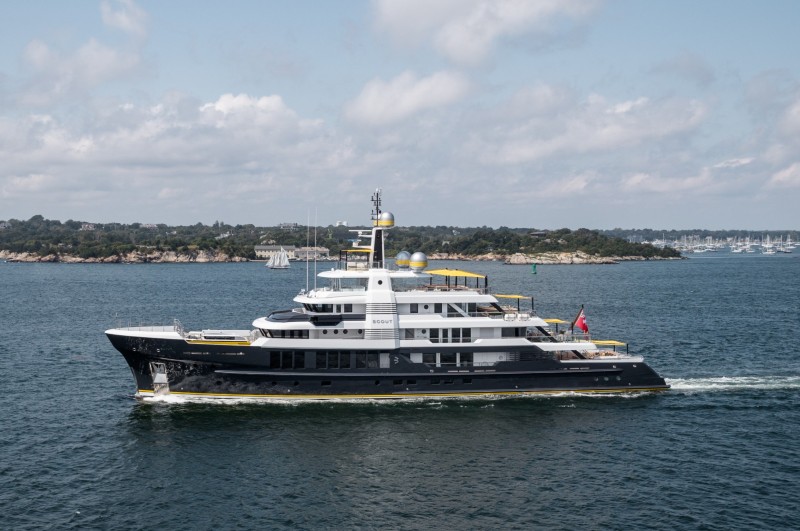
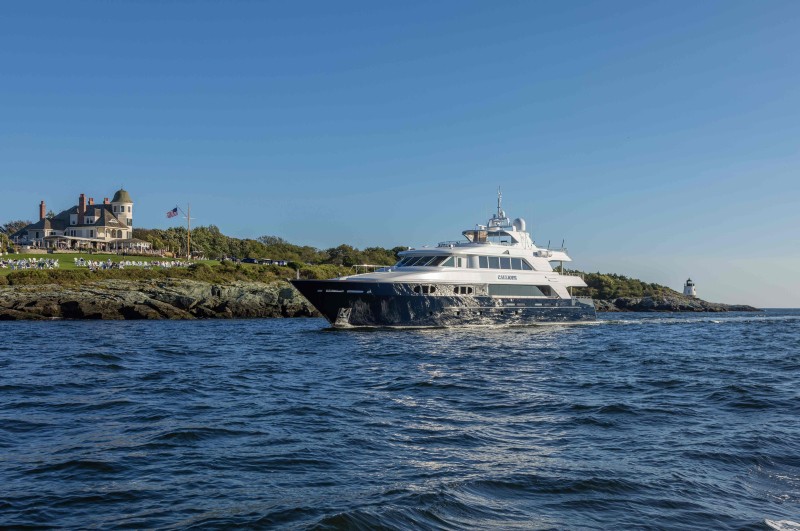
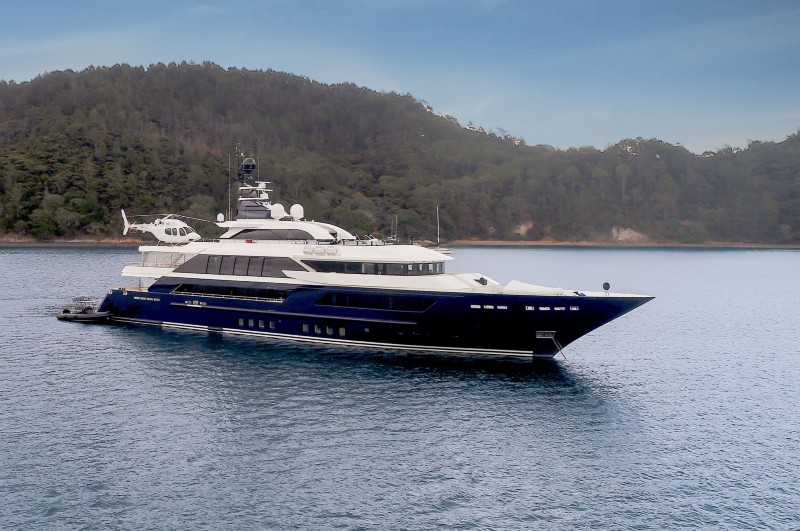
Stuart is pleased to announce his new Central Agency for SCOUT, the 64m / 209' explorer yacht, custom-built by Royal Hakvoort Shipyard in 2019. SCOUT was built for experienced owners who wanted a yacht capable of genuine global cruising with all the qualities of a sophisticated private home for long stays on board.
Her exploration credentials are impressive: her steel hull is Ice Class 1D, with a 1,416 GT interior volume and an 11.6m beam. Twin Caterpillar 3512C engines give her a 12.5-knot cruising speed, 15.2-knot maximum speed and 6,300 nautical mile range at 10 knots. She also has a “touch and go” helideck, forward observation lounge, elevators and large open sundeck and carries two 8m / 26’2” tenders forward.
The yacht's design and construction are equally significant. SCOUT was the largest yacht Hakvoort had built at the time of her delivery, and the project brought together Hakvoort, Diana Yacht Design and H2 Yacht Design in a highly individual brief. H2 was responsible for both exterior and interior design, creating a yacht with a powerful, go-anywhere exterior coupled with a beautifully laid-out, spacious interior with an industrial edge, including a botanical garden, gym, spa and inside-outside guest areas. SCOUT received a commendation for her holistic design at the 2020 Design & Innovation Awards.
SCOUT accommodates 16 guests in 7 staterooms, including the owner's dedicated deck, best described as a private residential apartment, with a private library, a large aft-facing bedroom with a private aft terrace, separate port and starboard bathrooms and dedicated dressing areas. In addition, there are four guest staterooms on the main deck and two on the lower deck. SCOUT carries 16 crew.
There is another reason why SCOUT deserves particular attention. The yacht was built before the disruption and cost escalation that reshaped yacht building after the pandemic. Shipbuilders have faced substantial increases in labor and material costs, supply-chain disruption and a shortage of skilled craftsmen. Various market reports put the increases in new-yacht manufacturing costs as high as 33 percent in 2024, and they have only exponentially increased since.
Building a yacht like SCOUT today – commissioning a large, custom steel yacht, with Ice Class capability, substantial volume developed around an owner's requirements and extensive bespoke engineering and finishing– would be a major financial undertaking. This makes SCOUT a compelling opportunity: at an asking price of €95 million, she offers the scale, engineering and individuality of a custom Dutch build, together with immediate availability — something that matters in today’s market.
For more details, contact me at + 1 954 328 6553 or Stuart.Larsen@FraserYachts.com
Her exploration credentials are impressive: her steel hull is Ice Class 1D, with a 1,416 GT interior volume and an 11.6m beam. Twin Caterpillar 3512C engines give her a 12.5-knot cruising speed, 15.2-knot maximum speed and 6,300 nautical mile range at 10 knots. She also has a “touch and go” helideck, forward observation lounge, elevators and large open sundeck and carries two 8m / 26’2” tenders forward.
The yacht's design and construction are equally significant. SCOUT was the largest yacht Hakvoort had built at the time of her delivery, and the project brought together Hakvoort, Diana Yacht Design and H2 Yacht Design in a highly individual brief. H2 was responsible for both exterior and interior design, creating a yacht with a powerful, go-anywhere exterior coupled with a beautifully laid-out, spacious interior with an industrial edge, including a botanical garden, gym, spa and inside-outside guest areas. SCOUT received a commendation for her holistic design at the 2020 Design & Innovation Awards.
SCOUT accommodates 16 guests in 7 staterooms, including the owner's dedicated deck, best described as a private residential apartment, with a private library, a large aft-facing bedroom with a private aft terrace, separate port and starboard bathrooms and dedicated dressing areas. In addition, there are four guest staterooms on the main deck and two on the lower deck. SCOUT carries 16 crew.
There is another reason why SCOUT deserves particular attention. The yacht was built before the disruption and cost escalation that reshaped yacht building after the pandemic. Shipbuilders have faced substantial increases in labor and material costs, supply-chain disruption and a shortage of skilled craftsmen. Various market reports put the increases in new-yacht manufacturing costs as high as 33 percent in 2024, and they have only exponentially increased since.
Building a yacht like SCOUT today – commissioning a large, custom steel yacht, with Ice Class capability, substantial volume developed around an owner's requirements and extensive bespoke engineering and finishing– would be a major financial undertaking. This makes SCOUT a compelling opportunity: at an asking price of €95 million, she offers the scale, engineering and individuality of a custom Dutch build, together with immediate availability — something that matters in today’s market.
For more details, contact me at + 1 954 328 6553 or Stuart.Larsen@FraserYachts.com
March 2026
>
NEW CENTRAL AGENCY: ODYSSEY Ocean living, taken seriously: ODYSSEY is audaciously engineered around the enjoyment of life at sea.
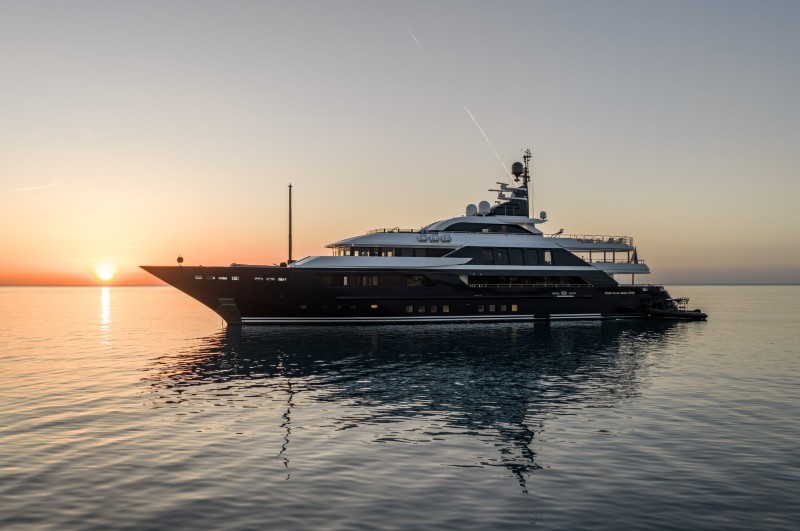
Stuart is pleased to announce his appointment as central agent for ODYSSEY, the 58.2m/190’9” full displacement yacht launched by CRN in 2013. Built to a high specification, reportedly for the owner of CRN, ODYSSEY was among the first Italian yachts in the 60m range to offer a fully custom, owner-driven layout, with all the attributes of a capable, high-quality full-displacement yacht.
Built on a long-range steel and aluminum platform, ODYSSEY is the result of a close collaboration between CRN and Zuccon International Project, responsible for her well-exciting exterior lines and interior design.
Open elements such as the master suite balcony and beach club heighten the enjoyment of being at sea: the stern hatch folds down to create a generous beach lounge, while near full-height windows in the loft-inspired upper salon dissolve the boundary between interior and exterior. Her aggressive, geometric profile and inspired engineering earned the World Yacht Trophy in 2013 for Most Innovative Yacht over 50m.
At 939GT, her exterior decks are carefully arranged and notably generous for a 58-metre yacht, offering al fresco dining across all levels and a forward-facing whirlpool on the sun deck. Additional features include a touch-and-go helipad for a Bell 429 or similar, a floodable lower-deck garage for a 7-metre tender, an elevator serving all decks, and zero-speed stabilization.
The former sun deck gym and spa have been converted into an airy VIP suite with en-suite bathroom and dressing room. ODYSSEY accommodates up to 13 guests in six staterooms, including a full-beam master on the main deck with his-and-her bathrooms, private study, and starboard balcony. Odyssey accommodates a crew of 14.
Powered by twin MTU engines, she reaches 16 knots and cruises comfortably at 14 knots, with a range of 3,000nm at 12 knots. Well-priced with a proven track record, ODYSSEY combines inventive engineering with Italian flair for ocean living. ODYSSEY is asking Euro 29,500,000.
Discover more at https://www.stuartlarsen.com/en/yacht-detail/02-yacht-for-sale/548-odyssey.cfm or get in touch with the Stuart for full details.
ODYSSEY is not offered for sale or charter to US residents.
Built on a long-range steel and aluminum platform, ODYSSEY is the result of a close collaboration between CRN and Zuccon International Project, responsible for her well-exciting exterior lines and interior design.
Open elements such as the master suite balcony and beach club heighten the enjoyment of being at sea: the stern hatch folds down to create a generous beach lounge, while near full-height windows in the loft-inspired upper salon dissolve the boundary between interior and exterior. Her aggressive, geometric profile and inspired engineering earned the World Yacht Trophy in 2013 for Most Innovative Yacht over 50m.
At 939GT, her exterior decks are carefully arranged and notably generous for a 58-metre yacht, offering al fresco dining across all levels and a forward-facing whirlpool on the sun deck. Additional features include a touch-and-go helipad for a Bell 429 or similar, a floodable lower-deck garage for a 7-metre tender, an elevator serving all decks, and zero-speed stabilization.
The former sun deck gym and spa have been converted into an airy VIP suite with en-suite bathroom and dressing room. ODYSSEY accommodates up to 13 guests in six staterooms, including a full-beam master on the main deck with his-and-her bathrooms, private study, and starboard balcony. Odyssey accommodates a crew of 14.
Powered by twin MTU engines, she reaches 16 knots and cruises comfortably at 14 knots, with a range of 3,000nm at 12 knots. Well-priced with a proven track record, ODYSSEY combines inventive engineering with Italian flair for ocean living. ODYSSEY is asking Euro 29,500,000.
Discover more at https://www.stuartlarsen.com/en/yacht-detail/02-yacht-for-sale/548-odyssey.cfm or get in touch with the Stuart for full details.
ODYSSEY is not offered for sale or charter to US residents.